Ford Bronco vs. Jeep Wrangler: Complete Comparison Guide
Two legendary off-roaders. One tough decision. This complete side-by-side breakdown covers performance, off-road capability, interior features, towing, safety, and pricing so you can choose with confidence.
The Ford Bronco returned in 2021 after a 25-year absence and immediately challenged the Jeep Wrangler’s throne with competitive specs, modern technology, and engine options producing up to 418 horsepower. The Wrangler answered with decades of trail-tested engineering, a broader engine lineup including a plug-in hybrid and a V8, and the kind of aftermarket support that comes from 80+ years of continuous production.
At Sarasota Ford, we help drivers across Sarasota, Bradenton, North Port, and Englewood make this choice every week. Both vehicles are genuine off-road legends — neither is a crossover dressed up for the trail. Here is everything you need to know to pick the right one for your lifestyle.
At a Glance — Key Differences
The Ford Bronco leads on technology, water fording depth, and standard safety features. The Jeep Wrangler leads on baseline ground clearance, towing capacity, engine variety, and aftermarket support. Read the full comparison below to see which priorities fit your driving life.
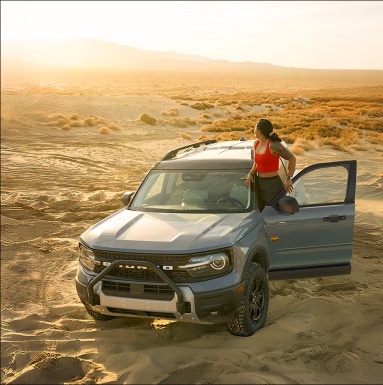
The 2026 Ford Bronco — available now at Sarasota Ford serving Sarasota, Bradenton, North Port, and Englewood.
Ford Bronco vs. Jeep Wrangler: Complete Spec Comparison
Every row below reflects the 2025–2026 model years for both vehicles. This master table covers the specs that matter most to off-road and adventure buyers.
| Category | Ford Bronco | Jeep Wrangler | Edge |
|---|---|---|---|
| Standard Engine (hp) | 300 hp (2.3L EcoBoost I4) | 285 hp (3.6L V6) | Bronco |
| Max Engine (hp) | 418 hp (3.0L EcoBoost V6 — Raptor) | 470 hp (6.4L V8 — 392) | Wrangler |
| Ground Clearance (base) | 8.3 inches | 10.8 inches | Wrangler |
| Ground Clearance (max) | 13.1 inches (Sasquatch Package) | 10.8 inches (Rubicon) | Bronco |
| Water Fording Depth | 33.5″ base / 37″ Sasquatch | 30 inches (all trims) | Bronco |
| Max Towing Capacity | 4,000 lbs (4-door) | 5,000 lbs (Unlimited) | Wrangler |
| Standard Infotainment Screen | 12-inch SYNC 4 | 7-inch (base), 8.4-inch Uconnect | Bronco |
| Wireless CarPlay / Android Auto | Standard — all trims | Available (select trims) | Bronco |
| Terrain Management Modes | 7 G.O.A.T. Modes | Selec-Terrain (select trims) | Bronco |
| Locking Rear Differential | Badlands trim and above | Rubicon (standard) | Even (depends on trim) |
| Auto Emergency Braking (standard) | All trims | Higher trims only | Bronco |
| Body Style Options | 2-door, 4-door | 2-door, 4-door (Unlimited) | Even |
| Number of Trims | 7 trims | 9 trims | Wrangler |
| Fuel Economy (base, combined) | ~20 MPG | ~19 MPG | Bronco |
Performance and Engine Options
Both vehicles prioritize low-end torque for off-road control rather than top-end horsepower. The differences in engine variety and character between the two lineups are meaningful at both ends of the price range.
Ford Bronco Powertrain Options
2.3L EcoBoost Four-Cylinder (Standard)
300 horsepower and 325 lb-ft of torque. Strong low-end pull, competitive fuel economy, and confident highway passing. The right engine for most buyers who split time between trails and daily driving.
2.7L EcoBoost V6 (Optional)
330 horsepower and 415 lb-ft of torque. Substantially more torque than the standard engine — ideal for towing and steep climbs. The best all-around engine for buyers with regular towing needs.
3.0L EcoBoost V6 (Raptor Only)
418 horsepower for high-speed desert running. Exclusive to the Bronco Raptor, paired with FOX Live Valve shocks and wide-body fenders. Built for sand and open terrain, not slow-speed rock crawling.
Badlands HOSS Suspension
The Bronco Badlands pairs its engine with the High-Performance Off-Road Stability Suspension (HOSS) — position-sensitive shock absorbers that maintain control on rough terrain at speed. Available with the Sasquatch Package.
Jeep Wrangler Engine Lineup
3.6L Pentastar V6 (Standard)
285 horsepower and 260 lb-ft of torque. The proven Wrangler base engine — reliable and widely available, but falls short of the Bronco’s standard engine in outright power output.
2.0L Turbo Four-Cylinder (Optional)
270 horsepower and 295 lb-ft of torque. Better efficiency than the V6 with stronger low-RPM torque delivery — an improvement for technical trail use and everyday fuel economy.
4xe Plug-In Hybrid (Optional)
375-horsepower system output and 470 lb-ft of torque — the highest torque figure in either lineup. Runs on electricity for short distances and provides maximum low-end power for rock crawling.
6.4L V8 (Rubicon 392)
470 horsepower from a naturally aspirated V8. The most powerful Wrangler ever built, pairing classic American muscle character with Rubicon-level trail capability at a premium price point.
Engine Comparison Table
| Engine | Vehicle | Horsepower | Torque | Best For |
|---|---|---|---|---|
| 2.3L EcoBoost I4 | Ford Bronco (standard) | 300 hp | 325 lb-ft | Daily driving + moderate trails |
| 2.7L EcoBoost V6 | Ford Bronco (optional) | 330 hp | 415 lb-ft | Towing + demanding trails |
| 3.0L EcoBoost V6 | Ford Bronco Raptor | 418 hp | Peak torque | High-speed desert running |
| 3.6L Pentastar V6 | Jeep Wrangler (standard) | 285 hp | 260 lb-ft | Everyday driving |
| 2.0L Turbo I4 | Jeep Wrangler (optional) | 270 hp | 295 lb-ft | Efficiency + trail torque |
| 4xe PHEV System | Jeep Wrangler 4xe | 375 hp | 470 lb-ft | Rock crawling + efficiency |
| 6.4L V8 | Jeep Wrangler Rubicon 392 | 470 hp | 470 lb-ft | Maximum power + trail capability |
The Bronco holds the edge on standard engine power (300 hp vs. 285 hp) and its base torque advantage matters on technical trails. The Wrangler counters with broader engine variety — particularly the 4xe plug-in hybrid for buyers who prioritize crawling torque and the 392 V8 for those who want maximum horsepower without compromise.
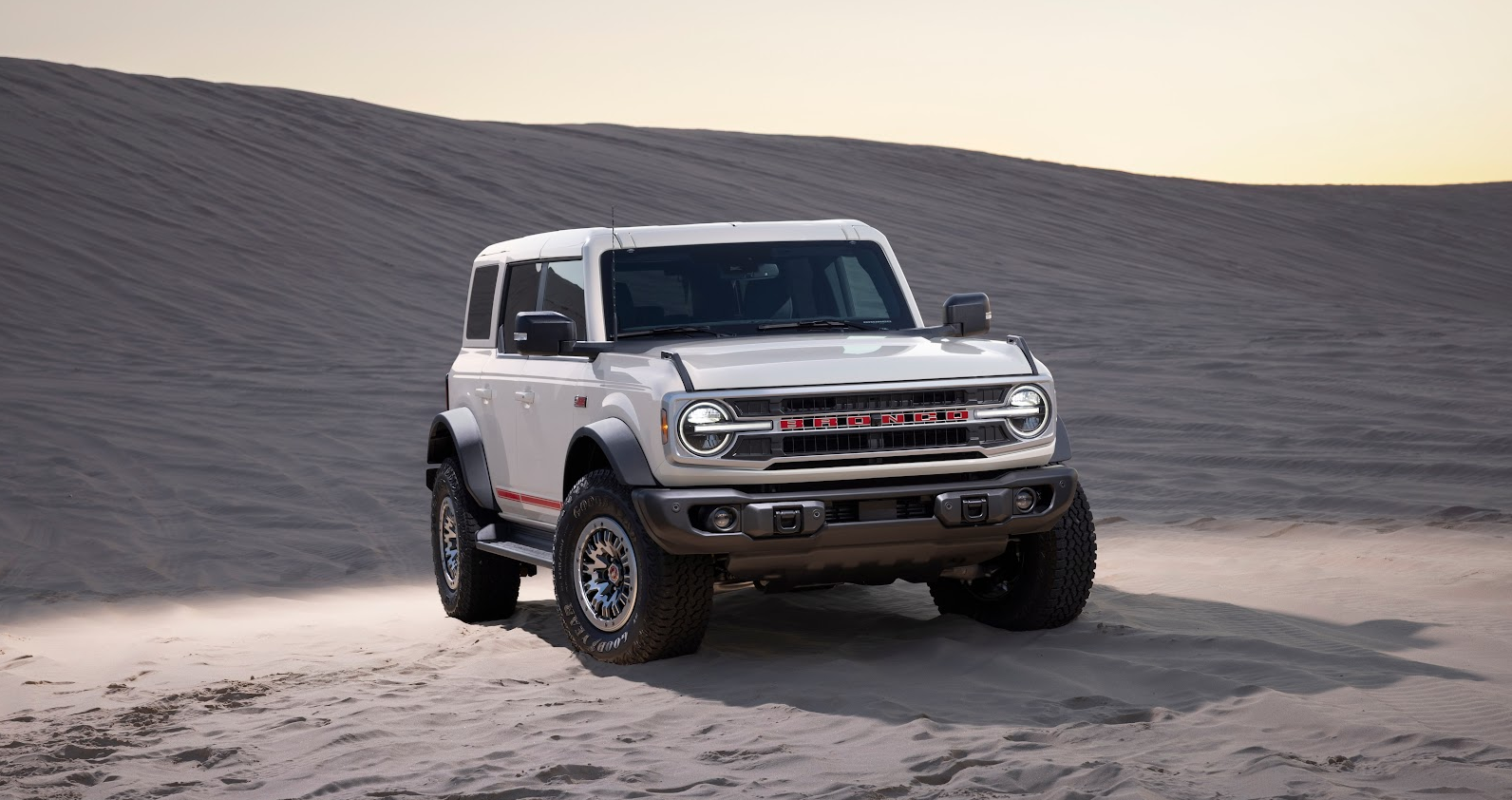
The 2026 Ford Bronco lineup is available to compare in person at Sarasota Ford — test drive any trim against your requirements before you decide.
Off-Road Capability: Head-to-Head on the Trail
Off-road performance is where both vehicles define themselves — and where the comparison becomes most nuanced. The Wrangler arrives more capable from the factory at the base trim level. The Bronco surpasses it when properly equipped with the Sasquatch Package.
Ford Bronco G.O.A.T. Modes — Goes Over Any Terrain
G.O.A.T. Terrain Management System: All 7 Modes Explained
Normal — Balanced everyday performance on paved roads. Eco — Maximized fuel efficiency for highway and light driving. Sport — Sharpened throttle and delayed shifts for spirited driving. Slippery — Reduced sensitivity for wet roads, loose gravel, and light mud — especially valuable in Florida’s rainy season. Sand — Maintained RPMs for momentum through soft sand and Gulf Coast beach access points. Mud/Ruts (Badlands) — Controlled wheel slip for deep mud and rutted trails. Rock Crawl (Badlands) — Precise throttle and braking for slow technical rock navigation.
The Wrangler uses Selec-Terrain on select trims with Auto, Snow, Sand/Mud, and Rock modes. The Rubicon adds Rock-Trac — a 4:1 low-range ratio, plus front and rear electronic locking differentials, and an electronic front sway bar disconnect. The sway bar disconnect is a significant trail advantage, allowing greater wheel articulation over uneven terrain at stock height.
Ground Clearance, Approach Angles, and Water Fording
| Off-Road Specification | Bronco (Base) | Bronco (Sasquatch) | Wrangler Sport | Wrangler Rubicon |
|---|---|---|---|---|
| Ground Clearance | 8.3 inches | 13.1 inches | 10.8 inches | 10.8 inches |
| Approach Angle | 35.7° | 43.2° | 41.4° | 44.0° |
| Departure Angle | 29.7° | 37.2° | 36.9° | 37.0° |
| Water Fording Depth | 33.5 inches | 37.0 inches | 30.0 inches | 30.0 inches |
| Low-Range Ratio | 2.72:1 | 4.70:1 | 2.72:1 | 4.0:1 |
| Standard Tire Size | 29 inches | 35 inches | 32 inches | 33 inches |
| Locking Rear Differential | Badlands+ only | Badlands+ only | Not available | Standard |
| Sway Bar Disconnect | Not available | Not available | Not available | Electronic (standard) |
| Skid Plates (standard) | Badlands trim | Badlands trim | All trims | All trims |
The Wrangler is more capable from the base trim — 10.8 inches of ground clearance and skid plates standard on the Sport. Add the Bronco’s Sasquatch Package and the equation flips: 13.1 inches of clearance and 37 inches of water fording depth surpass the Wrangler across every geometry metric. For Florida drivers, the Bronco’s water fording advantage is especially relevant — summer storms regularly leave trails and access roads temporarily flooded.
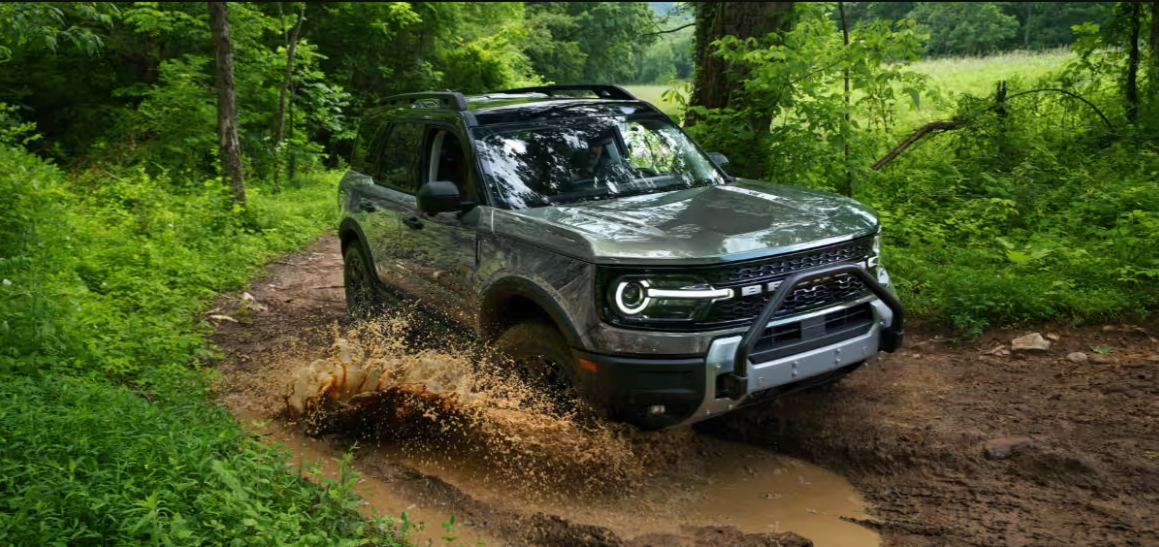
The Ford Bronco Badlands with the Sasquatch Package reaches 13.1 inches of ground clearance and 37 inches of water fording depth — class-leading off-road geometry.
Interior Features and Comfort: Living With Your Off-Roader
Both cabins are built around the assumption that you will return from adventures covered in mud, sand, or water. Adventure-focused materials, drain plugs, and washable surfaces are common ground. The differences emerge in technology, passenger space, and comfort features at each price point.
Ford Bronco Interior
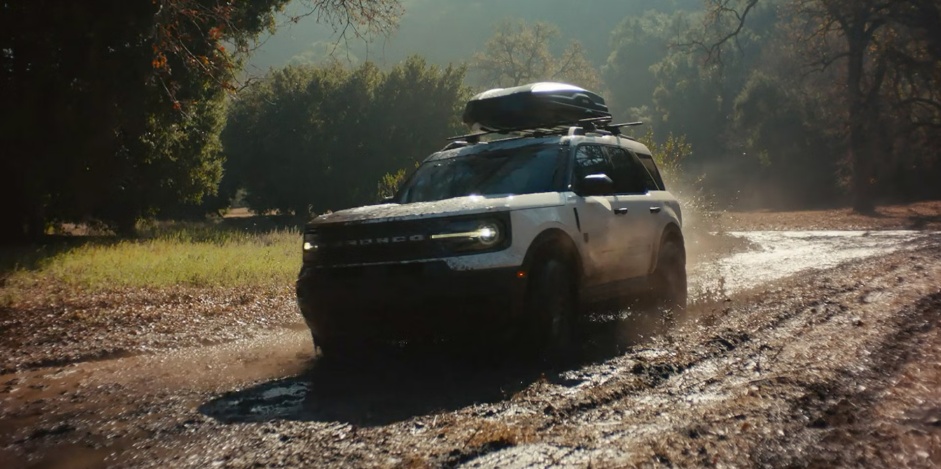
The Ford Bronco interior features a 12-inch SYNC 4 touchscreen standard, marine-grade vinyl seats, and rubberized flooring with drain plugs — built to be hosed out after every adventure.
The Bronco’s cabin features marine-grade vinyl seats across the lineup, designed for wet gear and muddy conditions. Rubberized flooring includes drain plugs, allowing you to rinse out the interior after trail use. The 12-inch SYNC 4 touchscreen with wireless Apple CarPlay and Android Auto is standard on every trim — a technology advantage no Wrangler trim matches at the base level. Higher Bronco trims add ventilated front seats, which are particularly welcome in Florida’s summer heat.
Jeep Wrangler Interior
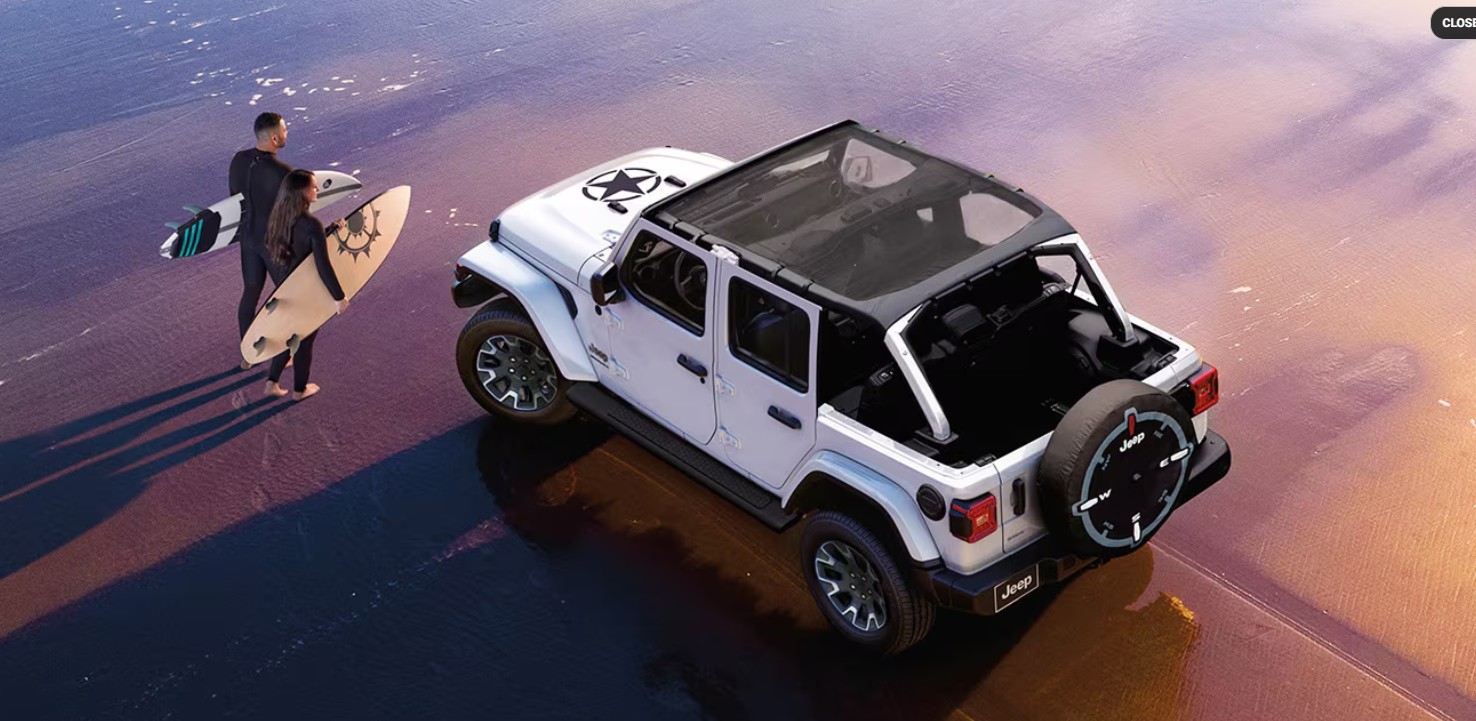
The Jeep Wrangler interior prioritizes passenger space, with up to 41.7 inches of rear headroom and available Nappa leather seating on upper trims.
The Wrangler Unlimited (4-door) provides a consistent 104 cubic feet of passenger volume with up to 41.7 inches of rear headroom and 37.3 inches of rear legroom. Adult passengers in the back seat travel more comfortably on longer trips than in the Bronco. Four-way lumbar support for the driver is available from the Sport S trim — a comfort feature the Bronco does not broadly offer. Upper Wrangler trims unlock Nappa leather seating, elevating the cabin experience significantly.
Interior and Technology Comparison
| Feature | Ford Bronco | Jeep Wrangler | Edge |
|---|---|---|---|
| Rear Passenger Volume | Varies by configuration | Up to 41.7″ headroom, 37.3″ legroom | Wrangler |
| Standard Touchscreen | 12-inch SYNC 4 | 7-inch (base), 8.4-inch Uconnect | Bronco |
| Wireless Apple CarPlay | Standard — all trims | Available (select trims) | Bronco |
| Heated Front Seats | Mid-level trims and above | Available from Sport S trim | Wrangler (available earlier) |
| Ventilated Front Seats | Available (upper trims) | Not widely available | Bronco |
| Driver Lumbar Support | Not standard | 4-way adjustable (available) | Wrangler |
| Premium Audio | Bang & Olufsen (10 speakers) | Alpine premium system | Even |
| Washout Interior / Drain Plugs | Standard — all trims | Available | Bronco |
| Cargo Space (seats folded) | Up to 77.6 cubic feet | Comparable | Bronco (slight edge) |
| Over-the-Air Updates | Yes (SYNC 4) | Limited | Bronco |
Towing Capacity and Cargo Space
For Florida drivers who haul boats, jet skis, and trailers to Sarasota’s coastal launch points and recreational areas, towing capacity is a meaningful differentiator. The Wrangler holds a clear advantage here — especially for four-door configurations.
| Vehicle | Max Towing Capacity | Best Suited For |
|---|---|---|
| Jeep Wrangler Unlimited (4-door) | 5,000 lbs | Large trailers, full-size boats, equipment |
| Ford Bronco Raptor | 4,500 lbs | Mid-size trailers, recreational equipment |
| Ford Bronco (4-door) | 4,000 lbs | Jet skis, small trailers, lightweight campers |
| Ford Bronco (2-door) | 3,500 lbs | Small trailers, kayak and bike haulers |
| Jeep Wrangler (2-door) | 2,000 lbs | Light gear, very small trailers |
The Wrangler Unlimited’s 5,000-lb capacity over the Bronco four-door’s 4,000-lb limit is meaningful for buyers who regularly tow larger watercraft or enclosed cargo trailers. The Bronco two-door actually beats the Wrangler two-door (3,500 vs. 2,000 lbs), but most buyers comparing these vehicles are focused on four-door configurations. On cargo space, the Bronco holds a slight advantage with up to 77.6 cubic feet with rear seats folded.
Fuel Economy: What to Expect in Real-World Driving
Neither vehicle is purchased for fuel economy, but the difference adds up over time for daily drivers. The Bronco’s turbocharged EcoBoost engines generally deliver better combined efficiency than the Wrangler’s naturally aspirated V6. For Sarasota drivers who split time between city commuting and weekend trails, the Bronco is the more economical daily driver.
| Vehicle | Engine | City MPG | Highway MPG | Combined MPG |
|---|---|---|---|---|
| Ford Bronco | 2.3L EcoBoost I4 | 20 | 21 | 20 |
| Ford Bronco | 2.7L EcoBoost V6 | 18 | 19 | 18 |
| Jeep Wrangler | 3.6L Pentastar V6 | 17 | 22 | 19 |
| Jeep Wrangler | 2.0L Turbo I4 | 22 | 24 | 22 |
| Jeep Wrangler 4xe | 2.0L Turbo PHEV | 49 MPGe | 20 (gas only) | 29 MPGe |
Safety Features Comparison
The Bronco holds a meaningful safety advantage at lower trim levels. Ford Co-Pilot360 — including Automatic Emergency Braking — is standard on every Bronco trim. On the Wrangler, several safety features are reserved for higher trims or optional packages, meaning base buyers get less standard protection.
| Safety Feature | Ford Bronco | Jeep Wrangler | Edge |
|---|---|---|---|
| Automatic Emergency Braking | Standard — all trims | Higher trims / optional | Bronco |
| Blind Spot Monitoring | Available (mid-level+) | Available from Sport S | Even |
| Lane-Keeping System | Available (mid-level+) | Available (higher trims) | Bronco |
| Adaptive Cruise Control | Available (Co-Pilot360 Assist+) | Available (higher trims) | Even |
| 360-Degree Camera | Available (higher trims) | Not widely offered | Bronco |
| Warranty Coverage | 3yr/36K bumper-to-bumper; 5yr/60K powertrain | 3yr/36K bumper-to-bumper; 5yr/60K powertrain | Even |
Pricing, Trim Levels, and Value
| Price Range | Ford Bronco Trims | Jeep Wrangler Trims | What You Get |
|---|---|---|---|
| Entry (~$32K–$38K) | Base, Big Bend | Sport, Sport S, Willys | Wrangler: better factory off-road kit; Bronco: better standard technology |
| Mid-Range (~$40K–$50K) | Outer Banks, Badlands | Willys ’41, Sahara, 85th Anniversary | Bronco: trail hardware + tech; Wrangler: comfort and heritage |
| Premium (~$52K–$70K+) | Heritage, Stroppe, Raptor | Rubicon, Rubicon X, 392 | Bronco Raptor for desert speed; Wrangler Rubicon for rock crawling |
At the entry level, the Wrangler Sport arrives trail-ready with skid plates and 10.8 inches of ground clearance standard. The Bronco Base has stronger standard power and a far superior infotainment system but needs the Sasquatch Package to match the Wrangler’s factory off-road geometry. Mid-range trims shift the value toward the Bronco. At the premium tier, the Bronco Raptor is built for high-speed desert running while the Wrangler Rubicon is the rock-crawling benchmark — and typically at a lower price than the Raptor.
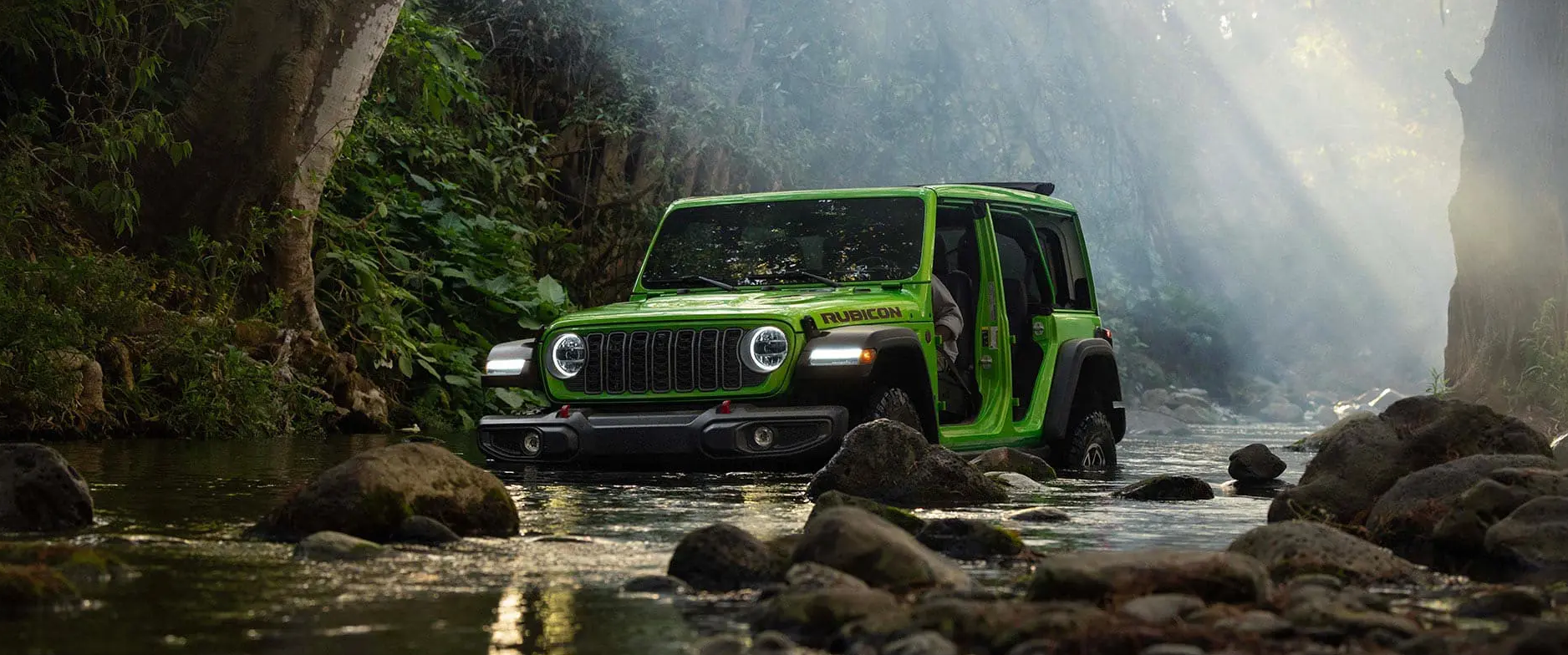
The 2026 Jeep Wrangler Rubicon with electronic locking differentials and a disconnecting sway bar remains the benchmark for slow-speed technical trail capability.
Which One Should You Buy?
There is no wrong answer between these two. They are the best off-road SUVs available, and either will handle what Florida and beyond can throw at them. The right choice depends on what you value most.
Choose the Ford Bronco If…
You want the most modern technology — 12-inch SYNC 4 and wireless CarPlay/Android Auto standard on every trim. Water fording matters to you — the Bronco leads at every equipment level (33.5 inches base vs. 30 inches for the Wrangler). You plan to use it as a daily driver and want better standard safety features. High-speed desert off-roading is your primary goal — the Bronco Raptor has no Wrangler equivalent for open terrain at speed.
Choose the Jeep Wrangler If…
Trail-ready capability from the base trim matters — 10.8 inches of clearance and skid plates without option packages. You regularly tow larger boats or trailers — 5,000 lbs vs. 4,000 lbs is meaningful for coastal Florida use. Slow-speed rock crawling is your primary off-road activity — the Rubicon’s locking differentials and sway bar disconnect are the segment benchmark. Engine variety is important — V8, plug-in hybrid, and turbo four-cylinder options give the Wrangler flexibility the Bronco cannot match. Long-term aftermarket customization is a priority — the Wrangler’s 80+ year ecosystem is unmatched.
Test Drive the Ford Bronco at Sarasota Ford
The best way to settle this comparison is to get behind the wheel. Our Sarasota showroom carries multiple Bronco trims and configurations — from the base model through the Badlands — and our team can walk you through every G.O.A.T. Mode, comparison table, and option package in person.
We serve drivers across Sarasota, Bradenton, North Port, Englewood, and all of Southwest Florida. Call us at 888-349-4989 or visit our showroom at 707 S Washington Blvd, Sarasota, FL 34236.