

Are There Tax Incentives for a Small Business Near Port Charlotte Buying Multiple Work Trucks This Year?

Quick Answer
Yes. A small business near Port Charlotte buying multiple work trucks in 2026 can use two major federal tax incentives: the Section 179 deduction, which lets you expense up to $2,560,000 of qualifying equipment this year, and 100% bonus depreciation, which the One Big Beautiful Bill Act made permanent for qualifying property acquired after January 19, 2025. To qualify, each truck generally must be used more than 50% for business and placed in service by December 31, 2026 for calendar-year filers. Sarasota Ford's commercial fleet and work truck department in Sarasota can help you line up the right trucks before the year-end deadline.
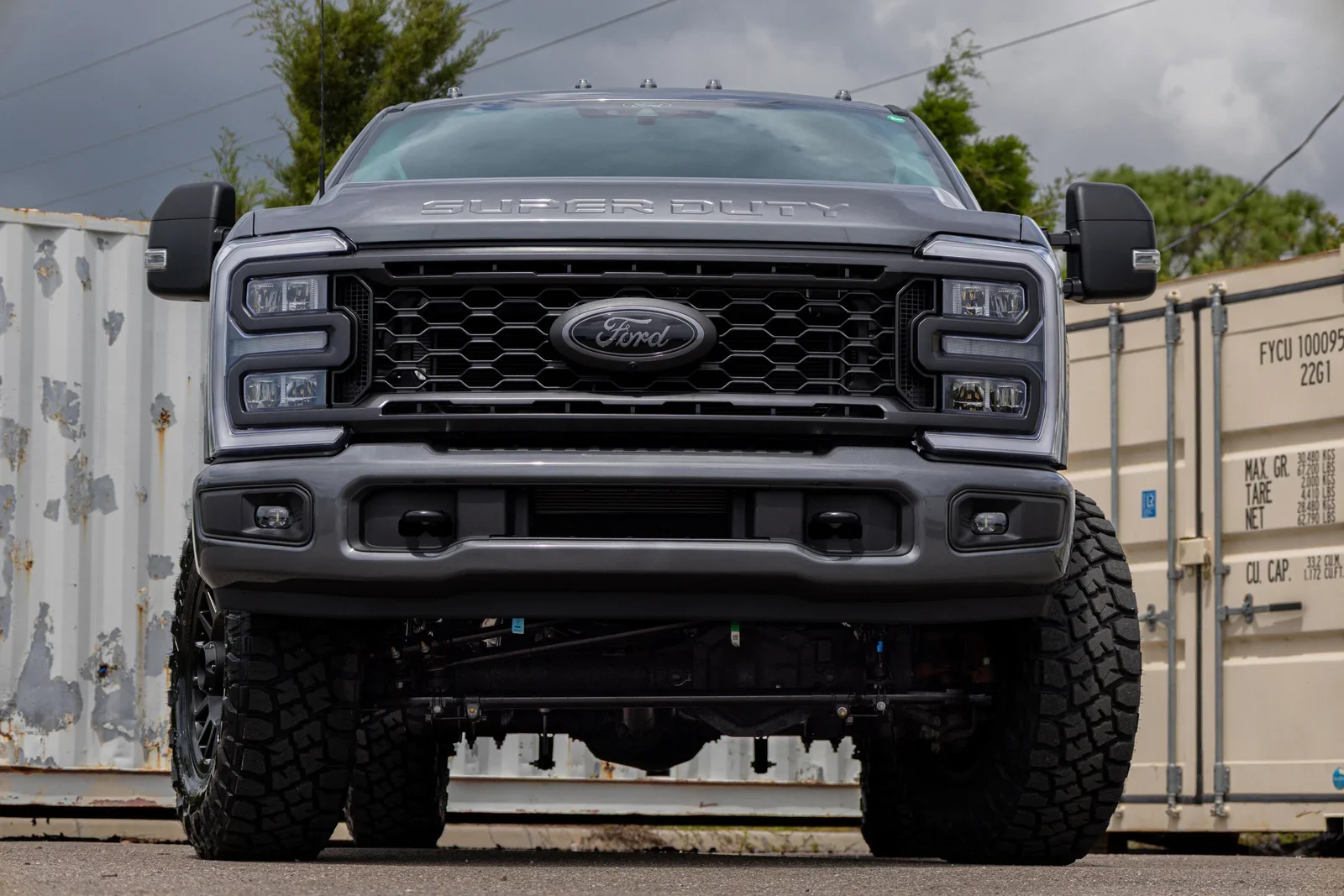
Weight matters: work trucks rated above 6,000 lbs GVWR, such as Super Duty pickups and chassis cabs, avoid the depreciation caps that apply to lighter vehicles. Businesses that register 5 or more new vehicles in a year may also qualify for Ford's 56M National Commercial Fleet Incentive. Because Florida does not follow federal bonus depreciation for corporate income tax, review your plan with a CPA before you buy.
Key Takeaways
- Section 179 for 2026: The IRS set the limit at $2,560,000, with a dollar-for-dollar phase-out once qualifying purchases exceed $4,090,000 (Rev. Proc. 2025-32).
- 100% bonus depreciation is back: Qualifying property acquired and placed in service after January 19, 2025 can be fully depreciated in year one, with no dollar cap.
- The 6,000-lb line: Trucks and vans at or under 6,000 lbs GVWR are capped at $20,300 of first-year depreciation (with bonus) for 2026 (Rev. Proc. 2026-15).
- Used trucks count: A pre-owned truck can qualify if it is new to your business and bought from an unrelated seller.
- EV credit is gone: The Section 45W Commercial Clean Vehicle Credit ended for vehicles acquired after September 30, 2025.
- Florida is different: Florida corporate filers must add back federal bonus depreciation and use lower Section 179 limits under HB 7031.
When a landscaping company in Port Charlotte, a pool contractor in Punta Gorda, or an HVAC outfit in North Port adds two, three, or more trucks in the same year, the tax treatment can change the true cost of that expansion by thousands of dollars per vehicle. The good news is that 2026 is one of the most favorable years in recent memory for business vehicle write-offs, thanks to the higher Section 179 limits and the permanent return of 100% bonus depreciation. This guide explains which incentives apply to a multi-truck purchase, how the 6,000-lb GVWR rule affects your deduction, what changed for electric work vans, how Florida's tax rules differ from federal rules, and which manufacturer fleet programs may lower your purchase price. It is general information, not tax advice, so confirm your situation with a licensed tax professional.
Which Work Trucks Qualify for 2026 Tax Incentives?
Before you sign for several trucks at once, confirm that each one meets the basic IRS requirements for Section 179 and bonus depreciation:
- More than 50% business use, since vehicles are listed property and must pass the qualified business use test to claim Section 179 or bonus depreciation.
- Placed in service in 2026, meaning the truck is ready and available for its business use, not just ordered or sitting in transit.
- Purchased or financed, because financed trucks can qualify in the year they are placed in service, while trucks under a true lease are generally deducted through lease payments instead.
- New to your business, which includes used trucks bought from an unrelated seller that your company has never used before.
- Gross vehicle weight rating (GVWR), listed on the driver's door-jamb label, which decides whether passenger automobile depreciation caps apply.
- Bed length or body type, since pickups with a cargo area of at least 6 feet in interior length and certain enclosed work vans are exempt from the $32,000 heavy-SUV Section 179 limit.
The Main Tax Incentives for Small Businesses Buying Multiple Work Trucks in 2026
1. Section 179 Deduction – Expense Up to $2,560,000 in 2026
Section 179 lets you elect to deduct the cost of qualifying equipment, including work trucks, in the year it goes into service instead of depreciating it over several years. For tax years beginning in 2026, IRS Rev. Proc. 2025-32 sets the maximum at $2,560,000, reduced dollar for dollar once the total cost of qualifying property placed in service during the year passes $4,090,000. For most small businesses buying a handful of trucks, that ceiling is far above what they will spend. One key limit to remember is that the Section 179 deduction cannot exceed the taxable income from your active trade or business for the year, although any unused amount can be carried forward. When you are ready to build your list, browse commercial trucks for sale in Florida at Sarasota Ford to compare F-150, Super Duty, chassis cab, and Transit options.
2. 100% Bonus Depreciation – No Dollar Cap for Qualifying Property
The One Big Beautiful Bill Act permanently restored 100% bonus depreciation for qualifying property acquired after January 19, 2025, and the IRS issued interim guidance in Notice 2026-11. Unlike Section 179, bonus depreciation has no annual dollar limit and is not restricted by your business income, so it can create a loss that may offset other income, subject to other tax rules. Many businesses combine the two, using Section 179 first and bonus depreciation for any remaining cost. Bonus depreciation applies automatically unless you elect out for a class of property, which can make sense if you expect to be in a higher bracket in future years.
3. The 6,000-lb GVWR Rule – Why Heavier Work Trucks Get Bigger Write-Offs
Trucks and vans rated at 6,000 lbs GVWR or less are treated as passenger automobiles, and IRS Rev. Proc. 2026-15 caps their first-year depreciation at $20,300 with bonus depreciation, or $12,300 without it, for vehicles placed in service in 2026. Vehicles rated above 6,000 lbs avoid those caps. There is one more limit to watch: heavy vehicles rated between 6,001 and 14,000 lbs that fall under the IRS sport utility vehicle definition are capped at $32,000 for Section 179 in 2026, though bonus depreciation can still apply to the remaining cost. Pickups with a cargo area of at least 6 feet in interior length, vehicles that seat more than nine passengers behind the driver, and cargo vans with an integral enclosure, no seating behind the driver, and no body section extending more than 30 inches ahead of the windshield are exempt from that $32,000 limit. If you need cargo space for shelving, ladders, and parts bins, review the Ford Transit cargo vans for sale at Sarasota Ford and confirm the GVWR of each configuration with the sales team.
4. Ford's 56M National Commercial Fleet Incentive – Savings on the Purchase Price
Tax deductions lower what you owe the IRS, while manufacturer fleet incentives lower what you pay for the truck. Ford's 56M National Commercial Fleet Incentive requires a Fleet Identification Number (FIN), and a business generally qualifies if it registered or leased 5 or more new vehicles of any make in the current or preceding calendar or model year, or the preceding 13-month period, or if it owns or leases a fleet of 15 or more vehicles. In Ford Pro's August 4, 2026 incentive bulletin, amounts varied by model, such as $2,000 on 2026 F-150 SuperCrew gas models and $1,000 on 2026 Super Duty pickups and Transit vans. The incentive is not combinable with Ford's Commercial Connection Upfit programs or APR offers, and amounts can change, so ask the Sarasota Ford Commercial Department which current programs your business qualifies for.
5. Commercial Clean Vehicle Credit (Section 45W) – No Longer Available
If you were counting on a federal tax credit for an electric work van such as the E-Transit, that option has closed. The One Big Beautiful Bill Act terminated the Section 45W Commercial Clean Vehicle Credit for vehicles acquired after September 30, 2025. Electric work vehicles can still qualify for Section 179 and bonus depreciation under the same business-use and placed-in-service rules as gas and diesel trucks.
How Do Florida Tax Rules Affect a Multi-Truck Purchase?
Florida does not have a personal income tax, so owners of many pass-through businesses do not face a state income tax adjustment on these deductions. Businesses that file Florida corporate income tax are a different story. Under HB 7031, signed June 11, 2026, Florida conforms to the Internal Revenue Code as it existed on January 1, 2025, which means it does not adopt the permanent 100% bonus depreciation. Florida corporate filers must add back federal bonus depreciation and recover it over seven years, and Florida's Section 179 limits remain at $1.25 million with a $3.13 million phase-out threshold. On the sales tax side, Florida charges 6% state sales tax on vehicle purchases plus a county discretionary sales surtax, and both Charlotte County and Sarasota County levy a 1% surtax for 2026 that applies only to the first $5,000 of a vehicle's sales price.
| Incentive | Best For | What to Know |
|---|---|---|
| Section 179 deduction | Profitable businesses that want to expense truck purchases this year | $2,560,000 limit for 2026, phasing out above $4,090,000; limited to active business income; $32,000 cap on heavy SUVs |
| 100% bonus depreciation | Large multi-truck purchases or businesses with lower taxable income | For qualifying property acquired after January 19, 2025; no dollar cap and no business income limit |
| Trucks over 6,000 lbs GVWR | Super Duty pickups, chassis cabs, and heavier work vans | Not subject to passenger automobile depreciation caps; pickups with a 6-foot or longer cargo area are also exempt from the $32,000 SUV limit |
| Trucks at or under 6,000 lbs GVWR | Lighter pickups used for estimates and service calls | First-year depreciation capped at $20,300 with bonus or $12,300 without for 2026 |
| Ford 56M National Commercial Fleet Incentive | Businesses registering 5 or more new vehicles in a year or running 15 or more vehicles | Requires a FIN; amounts vary by model and change over time; not combinable with Commercial Connection Upfit programs or APR offers |
| Section 45W clean vehicle credit | No longer available for 2026 purchases | Terminated for vehicles acquired after September 30, 2025 |
How Can You Maximize Tax Savings When Buying Several Work Trucks?
A little planning before you buy can make a noticeable difference in your 2026 deduction:
- Take delivery before December 31, 2026, because a truck that is ordered but not placed in service by year-end generally cannot be deducted this year; start with an online finance application so approval is not the last step that holds up delivery.
- Check the GVWR of every truck on your list, since a lighter configuration can cap your first-year write-off at $20,300 while a heavier one may not be capped at all.
- Keep mileage logs from day one, because your deduction depends on proving more than 50% business use, and dropping to 50% or below in a later year can trigger recapture.
What Should You Ask Before Buying Multiple Work Trucks for Tax Purposes?
- Ask your CPA whether Section 179, bonus depreciation, or a combination gives your business the best result this year and in future years.
- Ask whether your business is a C corporation subject to Florida corporate income tax and how the Florida bonus depreciation add-back affects your return.
- Ask the dealer for the GVWR, bed length, and seating configuration of each truck in writing.
- Ask whether your business qualifies for a Ford Fleet Identification Number and which current fleet incentives apply to each model.
- Ask whether upfits such as flatbeds, racks, and shelving can be completed and the truck delivered before December 31, 2026.
- Request an itemized buyer's order for each truck that shows the price, upfit costs, Florida sales tax, county surtax, and title and registration fees.
If your business is based in Charlotte County, the team at Sarasota Ford also serves buyers as a Ford dealership near Port Charlotte, so you can handle sales, upfitting, and service for the whole fleet in one place.
Frequently Asked Questions
Are there tax incentives for a small business near Port Charlotte buying multiple work trucks this year?
Yes. For 2026, the two main federal incentives are the Section 179 deduction, which allows up to $2,560,000 of qualifying equipment to be expensed, and 100% bonus depreciation for qualifying property acquired after January 19, 2025. Work trucks used more than 50% for business and placed in service by December 31, 2026 can generally qualify, whether they are new or used to your business. A business that registers enough new vehicles may also qualify for Ford's National Commercial Fleet Incentive.
How much can a small business deduct for work trucks in 2026?
Under IRS Rev. Proc. 2025-32, the 2026 Section 179 limit is $2,560,000, and it begins to phase out dollar for dollar once total qualifying purchases placed in service during the year exceed $4,090,000. The Section 179 deduction is also limited to the taxable income from your active business, while 100% bonus depreciation has no dollar cap and is not limited by business income.
Do used work trucks qualify for Section 179 and bonus depreciation?
Generally, yes. A used truck can qualify if your business has not used it before and you buy it from an unrelated seller. It must also be placed in service during the tax year and used more than 50% for business.
Does a work truck need to weigh more than 6,000 pounds to get the full deduction?
It matters a great deal. Trucks and vans with a gross vehicle weight rating (GVWR) of 6,000 pounds or less fall under the passenger automobile depreciation caps, which allow up to $20,300 in first-year depreciation with bonus depreciation for vehicles placed in service in 2026. Heavier trucks avoid those caps, and pickups with a cargo bed at least 6 feet long in interior length are also exempt from the $32,000 Section 179 limit that applies to heavy SUVs.
Is there still a federal tax credit for electric work vans like the E-Transit?
No. The Commercial Clean Vehicle Credit under Section 45W was terminated by the One Big Beautiful Bill Act for vehicles acquired after September 30, 2025, so it is not available for electric work vehicles bought in 2026. Electric work vehicles can still qualify for Section 179 and bonus depreciation like other business vehicles.
Does Florida follow the federal work truck deductions?
Florida has no personal income tax, but businesses subject to Florida corporate income tax must adjust. Under HB 7031, signed June 11, 2026, Florida conforms to the Internal Revenue Code as of January 1, 2025, so it requires bonus depreciation to be added back and recovered over seven years, and it uses the pre-2025 Section 179 limits of $1.25 million with a $3.13 million phase-out threshold.
Can a small business get Ford fleet incentives when buying several trucks?
Possibly. Ford's 56M National Commercial Fleet Incentive requires a Fleet Identification Number (FIN), and a business generally qualifies if it registered or leased 5 or more new vehicles of any make in the current or preceding calendar or model year or preceding 13-month period, or if it owns or leases 15 or more vehicles. Incentive amounts vary by model and can change, so confirm current figures with your dealer.
Visit Sarasota Ford
- Address
- 707 S Washington Blvd
Sarasota, FL 34236 - Phone
- (941) 296-6907
- Sales Hours
- Mon–Fri: 8:30 AM–7:00 PM
Sat: 8:30 AM–6:00 PM
Sun: 11:00 AM–5:00 PM
Ready to Add Work Trucks to Your Port Charlotte Fleet?
Whether you need two pickups or a full set of upfitted vans, the Sarasota Ford commercial team can help you choose qualifying trucks and get them on the road before the 2026 tax year ends.
Explore Business Financing
Review financing options for one truck or several from Sarasota Ford.
Explore FinancingValue Your Trade
Request a free appraisal on the trucks you are replacing to lower your cost.
Get Trade ValueCall Sarasota Ford
Speak with a commercial specialist about work truck availability and fleet programs.
(941) 296-6907